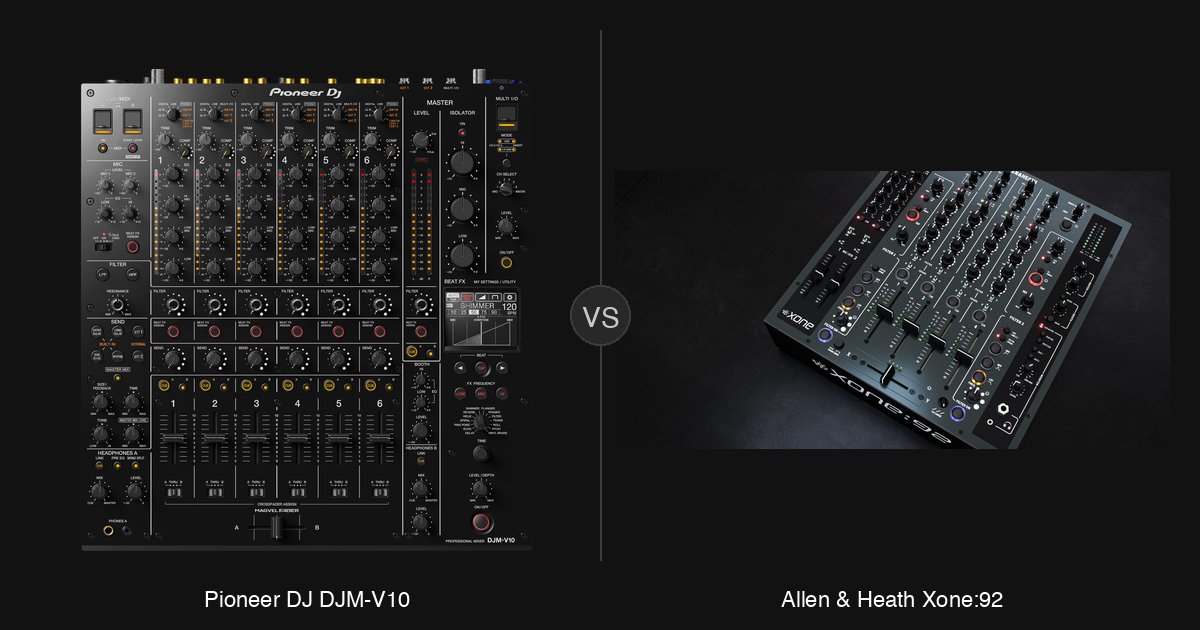

Analog or digital — it’s a question of faith among DJs. For over 15 years, I’ve been standing behind mixers, playing Afro House, Tech House, and Organic House in clubs across Germany. I’ve performed on Pioneer DJMs and Allen & Heath Xones, on rotary mixers and on budget controllers. The debate about the “better” mixer is as old as digital DJing itself — and it’s often emotional rather than technical. This article is my attempt to put the facts on the table: verified specifications, circuit design, community experiences, and personal impressions of the Pioneer DJM-A9, the DJM-V10, the Allen & Heath Xone:96, and the Xone:92.
Why This Topic? Why Now?
The DJ world has changed dramatically in recent years. AlphaTheta (formerly Pioneer DJ) released the DJM-V10 and DJM-A9 — two mixers that are technically far beyond the old DJM-900NXS2. Allen & Heath has revamped the Xone:92 as a MK2 and positioned the Xone:96 as a modern hybrid device. At the same time, the boutique scene is growing: manufacturers like Union Audio, PlayDifferently, and Mastersounds build premium handcrafted rotary mixers that have become the new standard in underground clubs.
What has always bothered me about this discussion: it’s rarely nuanced. One camp swears by the “warm” sound of analog mixers, the other considers digital effects and integrated soundcards indispensable. Both sides are right — and wrong at the same time. Because the reality is more complex than an Instagram reel can convey.
What Do “Analog” and “Digital” Actually Mean in a DJ Mixer?
Before we compare specific models, we need to clear up a widespread misconception: No modern DJ mixer is 100% analog or 100% digital. The Xone:92 is considered the “analog” reference, yet it has electronic components that process digital control signals. The DJM-A9 is classified as “digital,” but it converts the signal to analog before it reaches the master output.
What the community actually means when they say “analog”:
- Analog signal processing in the mix bus: The audio signal stays in the analog domain from input to output. EQ, filters, and volume control are handled by operational amplifiers and voltage-controlled amplifiers (VCAs) — not DSP chips.
- Analog filters (VCF): Voltage-Controlled Filters create their sonic behavior through electronic circuits, not algorithms. The result: a more organic, less predictable filter behavior, especially at high resonance.
- Minimal A/D-D/A conversion: The signal is not digitized for processing. Every conversion (analog → digital → analog) can introduce latency and sonic artifacts.
On the other side, the “digital” approach:
- DSP-based signal processing: EQ, filters, and effects are mathematically computed. This allows extreme precision and repeatability.
- Integrated effects processors: Beat FX, echo, reverb, delay — all on-board, no external hardware needed.
- High-resolution A/D-D/A converters: Modern converters (e.g., 32-bit ESS Technology in the DJM-A9) are so precise that theoretically no audible quality loss occurs.
The Contenders: Four Mixers in Detail
Pioneer DJM-A9 — The New Club Standard
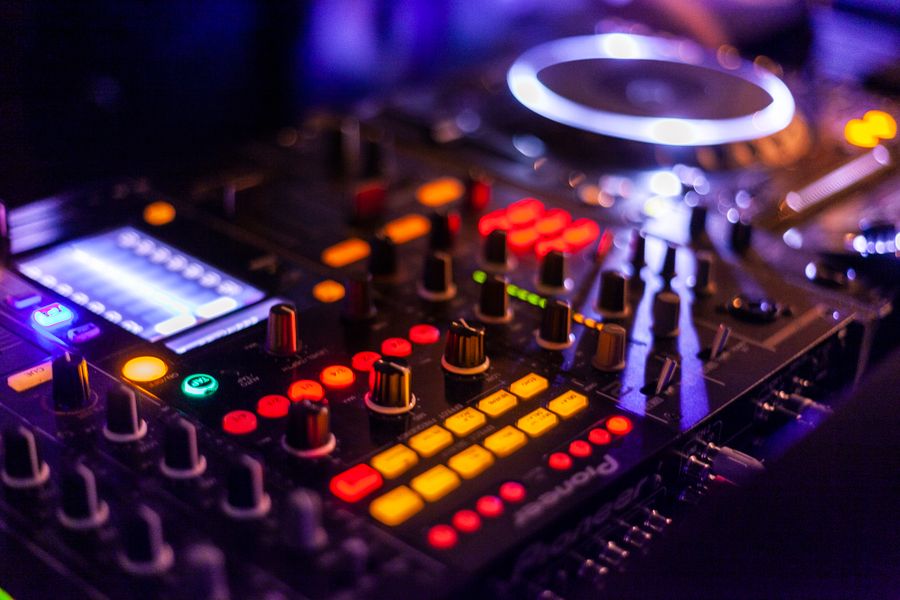
The DJM-A9 is the official successor to the DJM-900NXS2 and has become the standard mixer in most clubs worldwide. AlphaTheta has consistently focused on modern converter technology here.
Key specifications (per manufacturer):
- Channels: 4
- A/D and D/A converters: 32-bit, ESS Technology
- Sampling rate: 96 kHz
- Signal-to-noise ratio: 105 dB (LINE), 88 dB (PHONO), 79 dB (MIC)
- THD+N: < 0.005% (LINE)
- EQ: 3-band (HI / MID / LOW)
- Filter: HPF / LPF with Sound Color FX and Center Lock
- Effects: Beat FX (echo, delay, reverb, flanger, etc.)
- Crossfader: Magvel Fader
- Soundcard: Integrated, dual USB-B and USB-C
- Send/Return: 1 send / 1 return (1/4-inch TS jack)
- Multi I/O: USB Type A — digital effects routing via external software
- Notable features: Bluetooth streaming, Stagehand app support, Touch Preview
The DJM-A9 sounds noticeably different from the DJM-900NXS2. The often-criticized “boxy,” mid-forward sound of older Pioneers has been significantly reduced. The 32-bit ESS converters deliver a cleaner, more neutral sound. Still: the signal path remains digitally processed.
Pioneer DJM-V10 — Pioneer’s Answer to the Analog Camp
The DJM-V10 was Pioneer’s first attempt to bridge the gap between digital convenience and analog warmth. And for me personally, it’s a fascinating piece of engineering.
Key specifications (per manufacturer):
- Channels: 6
- Mixing engine: 64-bit digital mixing with dithering
- A/D and D/A converters: 32-bit
- Sampling rate: 96 kHz
- Signal-to-noise ratio: 105 dB (LINE), 88 dB (PHONO), 79 dB (MIC)
- EQ: 4-band per channel + compressor per channel
- Filter: HPF / LPF
- Master isolator: 3-band (HI / MID / LOW) — independent from channel EQ
- Effects: 14 Beat FX including Shimmer, Vinyl Brake
- Send/Return: 3 sends / 3 returns
- Multi I/O: 1/4-inch jack + USB Type A
- MIDI: DIN-Out for external devices
- Notable features: 6 channels, master insert, 64-bit summing
The V10 has something no previous Pioneer mixer offered: a 3-band master isolator that operates independently from the channel EQ. Add the 4-band EQ per channel and a compressor on every channel — tools you’d normally only find in studio consoles. The 3 send/return paths allow connecting external effects units, enabling the use of analog reverbs, tape delays, or other creative devices.
For me personally, the V10 is the most exciting Pioneer mixer ever made. The 64-bit mixing engine delivers summing results that sound noticeably more detailed than its 32-bit predecessors. And the send/return section opens up a world of creative possibilities that no other club standard mixer offers.
Allen & Heath Xone:96 — The Analog Hybrid
The Xone:96 is Allen & Heath’s flagship for DJs and simultaneously a statement: you can combine analog signal processing with modern digital features without compromising on sound.
Key specifications (per manufacturer):
- Channels: 6+2 (6 main channels + 2 return channels with dedicated EQ)
- Signal path: Fully analog mix bus
- Filters: Dual Xone:VCF — voltage-controlled filters with CRUNCH function (harmonic distortion)
- EQ: 4-band on main channels, 3-band parametric on returns
- Soundcard: Dual 32-bit/96 kHz USB soundcard, 24 channels, Traktor Scratch certified
- FX sends/returns: 2 sends / 4 returns
- Master insert: Yes
- Crossfader: InnoFader Mini (replaceable)
- Notable features: X-Link connection (cascading multiple mixers), CRUNCH harmonics on VCF
What makes the Xone:96 special is the combination: the analog mix bus remains untouched — the entire audio signal passes through analog circuits from input to master output. Meanwhile, a high-quality 32-bit/96 kHz USB soundcard sits inside, operating independently from the analog signal path. This means DJs using Traktor or Serato get digital connectivity without compromising the mixer’s analog character.
The Xone:VCF filters are the actual selling point for many DJs. Their behavior differs fundamentally from digital filters: they exhibit a natural saturation at high resonance that sounds more “musical.” The CRUNCH function on the Xone:96 pushes this even further — it adds controlled harmonic distortion that creates a powerful, raw sound character, particularly suited for techno and house.
Allen & Heath Xone:92 (MK2) — The Purist’s Reference
The Xone:92 is the mixer that many techno DJs call the best mixer ever made. Allen & Heath revised the MK2 version in 2024 — with improved circuitry, quieter filter switching, and optimized RIAA preamps.
Key specifications (per manufacturer):
- Channels: 4+2
- Signal path: 100% analog circuitry and mix bus summing
- Filters: Dual analog VCF with seamless switching (new quiet switching on MK2)
- EQ: 4-band with total kill on HF and LF
- RIAA preamps: Optimized for techno/house vinyl (MK2 update)
- Crossfader: Custom Mini InnoFADER Pro
- Soundcard: None — purely analog
- Notable features: Refined VCF tapers, improved analog circuits, no USB/digital connectivity whatsoever
The Xone:92 deliberately has no soundcard, no USB ports, no digital effects. It’s a pure mixer — in the most original sense. Two signals in, one out, and in between: the best analog filters ever put in a DJ mixer. Period.
For DJs who work with vinyl or external players and don’t need software integration, the Xone:92 is a sound machine without compromises. The 4-band EQs with total kill on highs and lows allow surgically precise blends that are nearly impossible with 3-band EQs.
The Sound Question: Why Do Analog Mixers Sound “Warmer”?
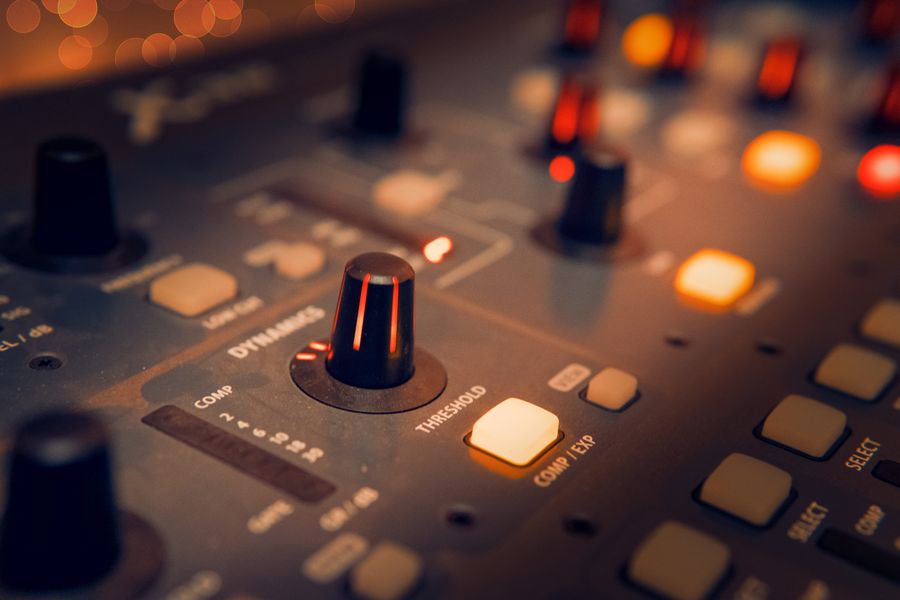
The statement “analog mixers sound warmer” comes up constantly. But what does it mean technically? This is where it gets interesting — and controversial.
A Reddit user with an electronics background posted a widely discussed technical explanation in 2025 (r/DJs, 51 upvotes): Many analog DJ mixers, including the Allen & Heath Xone:92 and classic Vestax models, use the TL072 operational amplifier in their EQ and signal circuits. This FET-input op-amp was developed in the 1970s and has a significantly higher total harmonic distortion (THD+N) and higher noise floor compared to modern op-amps (like OPA2134 or NE5532) — especially in the high frequencies.
The argument: When this chip appears at multiple points in the signal path (EQ board, ISO stage, summing stage), the small distortions add up and create the overall impression of “warmth.” Measurement data from NwAvGuy (2011) supports this thesis: the TL072 shows clearly higher THD+N values in standardized measurements compared to its successors.
However, another experienced user — profbx, who repairs and measures mixers professionally — vehemently disagreed (23 upvotes). His key points:
- Op-amps don’t make the critical difference: In complex circuits with many components, differences between op-amp types level out. He measured channels on high-end mixers with different op-amps and obtained nearly identical results.
- Mixer voicing is circuit design: The “warm bass” or “clear highs” of a mixer primarily come from the overall circuit design — comparable to a fixed EQ stage that shapes the fundamental character.
- Power supply and headroom: Allen & Heath’s secret lies primarily in high-voltage rails and a massive power supply that provides more headroom. This has little to do with op-amps but fundamentally affects the sound.
- VCA chips play a role: The Analog Devices SSM2164, used in the Xone:92 and some Ecler models, was identified by the YouTube channel Mixers Inside as a relevant factor in the mixer’s sound character.
The truth likely lies somewhere in between: It’s not one component that creates the warm sound but the combination of vintage-inspired op-amps, analog VCA chips, a powerful supply, and deliberate circuit design that together define a mixer’s character.
What is definitively established: Digital mixers distort differently than analog ones. When an analog mixer is driven into clipping, it produces soft, harmonic distortion. A digital mixer generates hard, unmusical artifacts when overdriven. For DJs who like to push the levels and run the mixer “hot,” this is a relevant difference.
Headroom in Practice: How Far Can You Push It?
The question every DJ wants answered: How far can you push the channel gain and master before it actually clips and crackles? The answer fundamentally depends on whether the signal path is analog or digital.
First, the basic principle: Every DJ mixer has three gain stages — input gain (trim), channel faders, and master output. Each of these stages has a maximum amplitude. The distance between the nominal operating level (0 dB on the meters) and that maximum is called headroom. When headroom runs out, clipping begins.
Important: The dB values on the meter LEDs of different mixers are not directly comparable. Pioneer mixers typically don’t enter the red zone until +12 dB, while other manufacturers like Ecler already show red at +5 dB. So “staying in the oranges” means something completely different on a Pioneer versus an Ecler — or an Allen & Heath.
Xone:92 & Xone:96 — Analog Headroom
The Allen & Heath Xone mixers benefit from their high-voltage power supply and analog circuitry: Beyond 0 dB, the signal doesn’t abruptly distort but saturates gradually. Technician Simon Pentz explains it this way: “The difference between 0 dB and the maximum level is the headroom. As the signal gets closer to the maximum level, it slowly begins to distort in a somewhat musical way.” This soft saturation adds even-order harmonics (2nd, 4th, 6th) — exactly what many DJs describe as “warmth.”
In practice, this means: Brief peaks into the red zone are less dramatic on analog mixers than on digital ones. The signal isn’t abruptly cut off but softly compressed. However, this doesn’t mean sustained redlining is fine — prolonged analog distortion noticeably degrades audio quality too.
A significant difference between the two Xone models: The Xone:96’s preamps are noticeably hotter than the Xone:92’s. Where the Xone:92 needs the gain at roughly 1 o’clock to bring a vinyl signal to a reasonable level, the Xone:96 already gets there at the 9 o’clock position — and at that point, the red LEDs are already flashing on loud records. This is confirmed by numerous user reports. Experienced DJs note: “The gains being hot, we have to be careful.” The Xone:96’s CRUNCH function on the filter boosts the signal “a lot more than expected” — extra caution is warranted here.
DJM-A9 & DJM-V10 — Digital Precision With Limits
With the Pioneer mixers, things work fundamentally differently. Both mixers use 32-bit converters at 96 kHz and achieve a signal-to-noise ratio of 105 dB (line) with less than 0.005% total harmonic distortion (THD). Internally, the dynamic range is enormous. But: The D/A converter at the output has a hard ceiling at 0 dBFS (Decibels Full Scale). Simon Pentz: “Digital circuits have no headroom above 0 dBFS. Digital distortion is not musical and sounds horrible!”
Here’s where an interesting design difference emerges: The DJM-A9 features a built-in output limiter that prevents the output signal from driving uncontrolled into hard digital clipping. According to community reports, it’s “almost impossible to overload the digital inputs from a CDJ.” This makes the A9 particularly robust in club environments where not every DJ gain-stages properly.
The DJM-V10 additionally comes with a compressor per channel that can catch level peaks before they reach the master. Used correctly, it prevents a single channel from driving the overall signal into distortion.
Practical Gain-Staging Rules
Here’s the short version for practice:
- On all mixers: Set the input gain so the average level sits at 0 dB (last green LED) with peaks hitting the orange range. Always leave some headroom on the master — when the room fills up, bodies absorb sound energy and you’ll need that headroom reserve.
- DJM-A9 / DJM-V10 (digital): Treat the red LEDs as a hard limit. Beyond that, there’s no mercy — only unmusical, harsh artifacts. The A9’s output limiter helps, but it’s a safety net, not a license to redline.
- Xone:92 / Xone:96 (analog): Occasional red peaks are less catastrophic — the signal is softly saturated rather than hard-clipped. But sustained red still noticeably degrades sound quality. On the Xone:96, pay special attention to the hot gain — less is more.
- In general: If a single channel is clipping, that distorted signal still passes through the entire chain — even if the master isn’t in the red. You’re just amplifying an already distorted signal.
Filters: The Biggest Practical Difference
If I had to name one single thing that most distinctly separates analog and digital mixers sonically, it wouldn’t be the converters, the op-amps, or the mix bus. It would be the filters.
The Xone:VCF filters on Allen & Heath mixers are voltage-controlled filters based on analog circuits. Their behavior at high resonance is organic, slightly unpredictable, and “musical” — they can literally make the signal sing. The CRUNCH function on the Xone:96 adds controlled harmonic distortion that makes the sound even more powerful.
The filters on Pioneer DJMs, by contrast, are digitally calculated. They’re precise, repeatable, and exactly adjustable via parameters. But many DJs — and this is not a niche opinion but a recurring theme in community discussions — find Pioneer filters “sterile” or “unpleasant at high resonance.”
A quote from the Reddit thread (user PCDJ, 21 upvotes):
“I didn’t like the mid forward, digital, boxy sound from DJM. Just something about how everything played through it felt coloured in a way I didn’t like. I especially didn’t like how the filters sounded. The resonance is terrible on them.”
— PCDJ, r/DJs (2024)
This is subjective — but it aligns with my own experience. Xone filters invite experimentation. Pioneer filters are tools. Both have their place.
EQ Philosophy: 3-Band vs. 4-Band
The DJM-A9 uses a classic 3-band EQ (HI / MID / LOW). The DJM-V10 offers a 4-band EQ on all channels. The Xone:96 and Xone:92 also feature 4-band EQs — the Xone:92 even with total kill on highs and lows.
Is this a relevant difference? Yes — but not as dramatic as some claim.
The 4-band EQ allows finer separation of frequency ranges, which is particularly beneficial for long blends. DJs who mix two tracks over 32 or 64 bars — standard in techno and deep house — benefit from the ability to control upper mids separately from lower mids. For faster transitions (8–16 bars), which I often use in afro house or tech house, the difference is smaller.
The DJM-V10 additionally combines its 4-band EQ with a compressor per channel and the 3-band master isolator — a combination that’s standard in the studio world but unique among DJ mixers. This allows shaping the sound at a level no other club mixer offers.
Send/Return, Multi I/O & External Effects
One aspect that often tips the scales for me personally is the ability to integrate external effects units. And this is where a lot of misinformation floats around — so let’s get the basics straight:
Send/Return is an analog signal path: audio goes out via 1/4-inch jack to a hardware effects unit (reverb, delay, whatever) and comes back processed. Zero latency, direct signal flow. Multi I/O is the digital counterpart: audio is routed via USB to a laptop or tablet, processed by software, and sent back. Advantage: unlimited software effects without additional hardware. Downside: USB latency.
Here’s how the four mixers stack up:
- DJM-A9: 1 send / 1 return (1/4-inch jack) + Multi I/O via USB Type A. Enough for one hardware effects unit plus software effects — perfectly adequate for most club sets.
- DJM-V10: 3 send / 3 return (1/4-inch jack) + Multi I/O (1/4-inch jack + USB Type A) + master insert + MIDI DIN-Out. The most comprehensive routing of any club mixer — three independent analog effects paths plus digital routing.
- Xone:96: 2 send / 4 return + master insert. Purely analog, no Multi I/O — but four return channels with dedicated EQ, enabling complex effects chains.
- Xone:92: No send/return, no Multi I/O. Purist to the end.
For DJs who want to work with an analog reverb like the Strymon BigSky or a tape delay, these connections are essential. A deleted Reddit user put it well:
“I find that I can get so much better reverb using external boxes than the onboard Pioneer. […] When I DJ with a Model 1.4, I tend to do long looping + lots of mixer based filter and EQ tweaking + external reverb + a tiny bit of external beat effect from an EFX-500 to give a bit of polyrhythm to hi-hats.”
— Deleted user, r/DJs (2024)
This kind of workflow with multiple independent effects paths is significantly more limited with the DJM-A9’s single send/return — and outright impossible with the Xone:92. If you really want to dive deep into external effects, the V10 or Xone:96 are hard to beat.
The Community Speaks: First-Hand Experiences
In Reddit threads on the topic, certain patterns emerge repeatedly. Here’s a summary of the most common experience reports — not exhaustive, but sourced:
Pro Xone / Analog:
- Filter quality: Consistently rated as superior to Pioneer filters. Multiple users describe the Pioneer resonance as “terrible” (PCDJ) or praise Xone filters as the main reason to buy.
- Sound character: Warmer, “more pleasant,” less “boxy” than DJM mixers. The comparison DJM-900NXS2 → Xone:96 is frequently described as an upgrade.
- Flexibility: 4-band EQ, comprehensive send/return options, master insert, and the ability to use the mixer as a summing mixer in the studio.
- Value for money: The Xone:96 is approximately €1,000 cheaper than the DJM-A9 and approximately €1,500 cheaper than the DJM-V10 (user Strackete).
Pro Pioneer / Digital:
- Club standard: DJs who play regularly at different venues will encounter a DJM almost everywhere. Zero learning curve.
- Beat FX: Echo, reverb, delay — all on-board, no external gear needed. Indispensable for many DJs.
- Ergonomics: Pioneer mixers are “easier to play” and deliver “more consistent results” (user djsoomo, 12 upvotes).
- V10 sound quality: User Rhythmic1 (4 upvotes): “The V10 sounds better overall than the Xone 96. Wildly improved sound quality from the DJM series. It’s slightly more clinical sounding than the Xone but it feels much punchier to me.”
- Integrated soundcard: Rhythmic1 notes that the V10’s soundcard sounds better than the Xone:96’s.
The Pragmatists:
- “It depends on the genre”: Fast sets with many transitions → DJM. Long atmospheric sessions with extended blends → Xone (user djsoomo).
- “Both have their place”: User nzoschke owns both — V10 as primary, Xone:96 as backup — and values each for different contexts.
- “You don’t need beat FX”: Several experienced DJs argue that good music doesn’t need effects (user fiat-flux, 14 upvotes: “Playing better music is compensation enough”).
Boutique Mixers: Union Audio, PlayDifferently & Others
Beyond the big two — Pioneer/AlphaTheta and Allen & Heath — a boutique scene is growing that specializes in premium, handcrafted mixers. Union Audio from the UK builds uncompromising analog rotary mixers like the Orbit.6 — in small batches, with top-tier components and prices north of €3,000. PlayDifferently, the brand behind the Model 1.4, follows a similar philosophy: purist analog signal processing focused on sound quality over feature lists. Mastersounds delivers another high-quality rotary mixer with the Radius 4V.
These mixers target DJs for whom sound is the top priority and who are willing to forgo beat FX, integrated soundcards, and USB connectivity. In the underground scene — from Berlin’s Berghain to small warehouse raves — they’ve long been established.
A Reddit user describes their experience with the Union Audio Elara 4:
“I went with a Union Audio Elara 4 and it’s amazing. Basically the same reasons as you that I didn’t go with a Pioneer, the sound is just not for me and I especially hate the filters on Pioneer mixers.”
— soniq__, r/DJs (2024)
My Personal Conclusion — Honest, Without Recommendation
I’m not going to crown a “winner” here. That would be disingenuous, because each of these mixers can be the right choice for a specific context, genre, and workflow.
What I can say after 15 years behind the decks:
- The DJM-A9 is an excellent club standard mixer with improved sound over the DJM-900NXS2. DJs who use effects and play at different venues can’t go wrong with it.
- The DJM-V10 impressed me most personally — the combination of 64-bit mixing, 4-band EQ, compressor, and especially the send/return section opens up creative possibilities no other club mixer offers. Its sound has a warmth and punch that older Pioneers lacked.
- The Xone:96 is the most versatile mixer in this comparison — analog mix bus, digital via soundcard, with the best filters in the DJ world, and a price point well below the Pioneer flagships.
- The Xone:92 is for purists who want the best analog sound without compromise. No USB, no effects, just sound.
But what all these mixers have in common: They’re all so good that the limiting factor behind the decks is always the DJ, not the equipment. A skilled DJ will create a better sound on a DJM-A9 than an average DJ will on a Xone:92. The mixer quality debate is often conducted in the community with an intensity that exceeds the actual sonic difference.
My advice: If possible, borrow the mixers you’re interested in and test them in your familiar environment with your music. No spec sheet and no blog article can replace that experience.
Now it’s your turn: What mixer do you play on — and have you ever switched? What convinced you or let you down? Drop it in the comments, I’m curious about your experiences.
Comparison Table: DJM-A9, DJM-V10, Xone:96, Xone:92
All specifications are sourced from the official manufacturer product pages (AlphaTheta and Allen & Heath, as of February 2026).
| Feature | DJM-A9 | DJM-V10 | Xone:96 | Xone:92 MK2 |
|---|---|---|---|---|
| Channels | 4 | 6 | 6+2 | 4+2 |
| Signal path | Digital | Digital (64-bit) | Analog (mix bus) | 100% Analog |
| A/D-D/A converters | 32-bit ESS | 32-bit | 32-bit/96 kHz (USB) | — |
| EQ | 3-band | 4-band + compressor | 4-band (3-band param. returns) | 4-band (total kill HF/LF) |
| Filters | Digital HPF/LPF | Digital HPF/LPF | Analog VCF + CRUNCH | Analog VCF |
| Beat FX | Yes (echo, reverb, etc.) | Yes (14 FX incl. Shimmer) | No | No |
| Send/Return | 1 S / 1 R + Multi I/O | 3 S / 3 R + Multi I/O | 2 send / 4 return | No |
| Master isolator | No | 3-band | No | No |
| Soundcard | Yes (dual USB) | Yes | Yes (32-bit/96 kHz, 24ch) | No |
| S/N ratio (LINE) | 105 dB | 105 dB | —* | —* |
| RRP (approx.) | ~€2,500 | ~€3,000 | ~€1,700 | ~€1,500 |
Coming Up Next: RMX-1000 vs. RMX Ignite
In my next article, I’ll tackle a related topic: Pioneer’s RMX-1000 vs. the new RMX Ignite — two effects processors that extend the creative workflow behind the decks in fundamentally different ways. The RMX-1000 is a classic that has been part of club setups worldwide for over a decade. The RMX Ignite is AlphaTheta’s vision for a new generation. Here too, it gets exciting: analog-inspired effects philosophy versus DSP power. Stay tuned.
Sources
- AlphaTheta / Pioneer DJ — DJM-A9 Product Page & Specifications
- AlphaTheta / Pioneer DJ — DJM-V10 Product Page & Specifications
- Allen & Heath — Xone:96 Product Page
- Allen & Heath — Xone:92 MK2 Product Page
- Reddit r/DJs — “To explain why analog DJ mixers sound ‘warm'” (User: Just-Inflation-5137, 2025)
- Reddit r/DJs — “DJM vs. Xone / Digital vs. Analogue” (User: C0y0te71, 2024)
- NwAvGuy — Op-Amp Measurements (2011)
- YouTube — Mixers Inside / Kamil — DJ Mixer Teardowns & Component Analysis